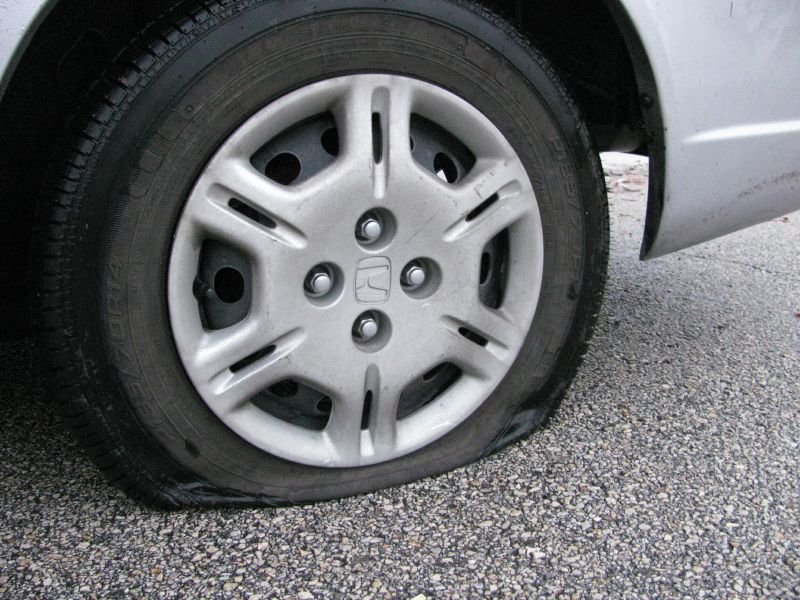
Traveling and weather can bring about many unforeseen problems. When my family and I lived in Portland, we had a snow storm that hit close to Christmas. There were over two feet of snow with drifts over four feet tall in places. We could literally walk right off the porch and land gently in the snow. This made me a little nervous because we planned on visiting my parent’s house three and a half hours away for Christmas, and I wasn’t sure how safe travel was going to be. Since my husband was a pastor of a church, we were not leaving until Christmas Eve night. However, with all the snow, the church decided to cancel the Christmas Eve service which meant we were able to depart earlier in the day. We loaded up the car and off we went with our chains on ready to venture out onto the snowy roads. Once we made it to the freeway, the roads were quite bare so the chains came off. As we drove on, we could see other cars’ chains littering the road. Unfortunately, our car hit one and the result was a flat tire. Fortunately, a stranger saw us struggling to put on the spare and stopped to help. My family and I finally made it to the tire store, and they were able to replace the tire we hadn’t planned on needing, and off we went only an hour or two behind schedule. Luckily we had some money in our emergency fund to cover this unexpected cost.
I spoke a little about emergency funds in one of my earlier posts. What exactly is an emergency fund and why do you need one? In my mind, an emergency is something you did not plan on in your budget but needs to be done. For example, an unexpected medical bill or unplanned repairs to your car. My husband and I started using a budget with an emergency fund after we had a lot of debt from credit cards. Before our emergency fund, if something unexpected happened, we would just use the credit card causing us to go further and further into debt. We knew something needed to change, and using a budget has greatly helped us stay out of debt.
How do you get started building an emergency fund? You set aside a certain amount of money each month. You can keep it in your checking account or savings account. I recommend keeping $1,000 as a buffer in your checking and leaving the rest in a savings account that you don’t touch until you need it. You can also keep track in a budget app. Every Dollar, by Ramsey Solutions, is an app I recommend. Some months we set money aside, others we aren’t able to. If we get extra money from taxes or selling things in our house, we will occasionally put that in our emergency fund. This is different than saving for a big item, like a sofa we saved up for. This is for things you weren’t expecting to happen right away.
When an emergency happens, we just transfer what we need to our checking account. After we use the money, we try to build it back up again. Ideally, saving up 3-6 months’ worth of expenses is a good goal to aim towards to have in your emergency fund, but an initial goal of $1,000 is a great starting point.
Having an emergency fund gives me peace of mind that we have some reserves saved up in case we have a rainy (or snowy) day. Do you use an emergency fund?
 Oil and Shine